
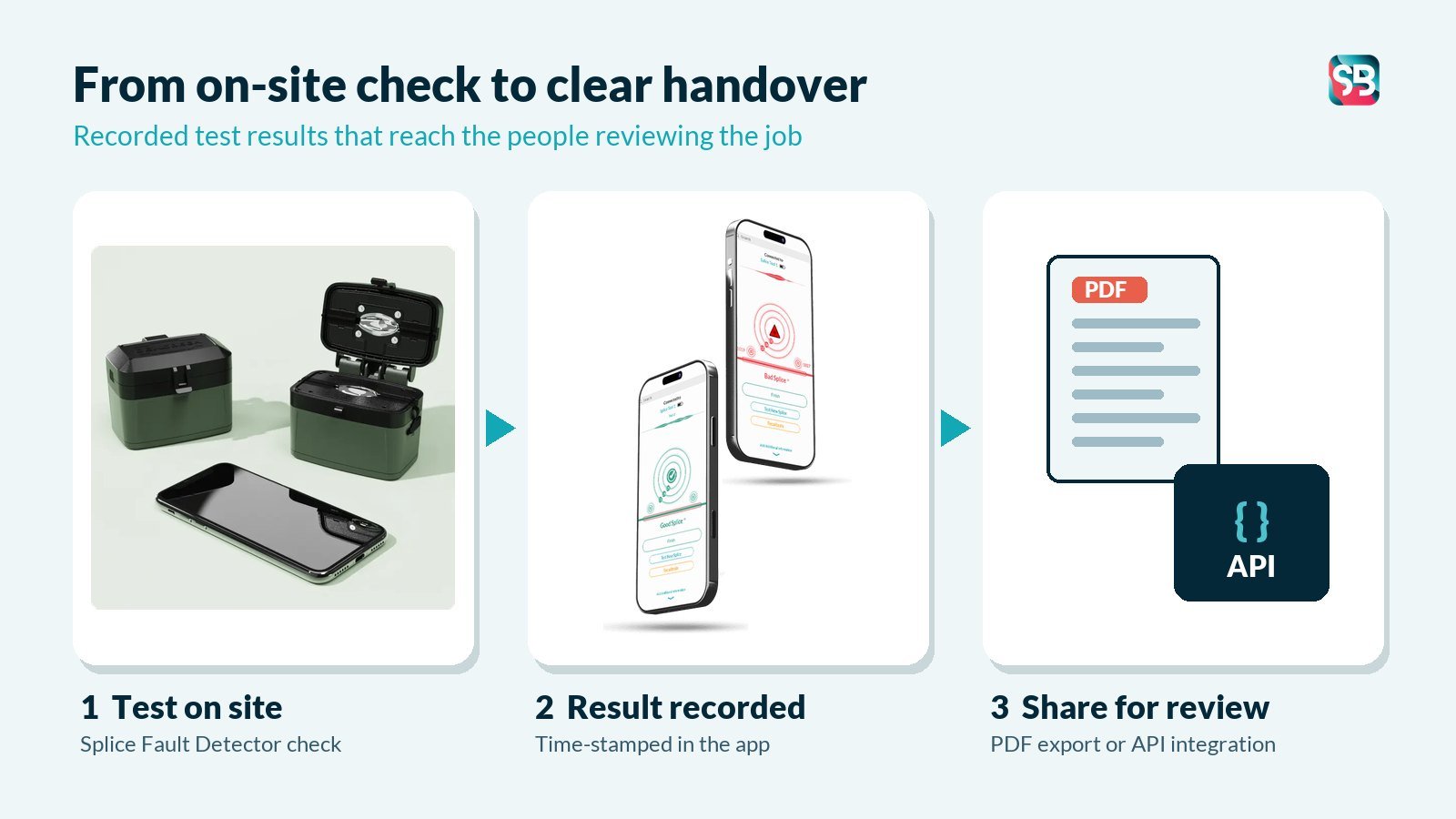
A successful field test is only part of a completed job. The result also needs to reach the people responsible for reviewing and accepting the work.
In many organisations, the moment of handover is where information is lost. An engineer completes a test, notes the result and moves on to the next job. By the time the completed work is reviewed, the reviewer may be relying on a summary, a tick box or a phone call, rather than the result itself.
Capturing the result at the point of work
SkillsBase’s app-connected Splice Fault Detector supports the capture of time-stamped test results, while reporting and integration options allow information to be exported as a PDF or transferred through application programming interfaces. This helps connect the engineer’s on-site check with the contractor’s or operator’s wider reporting process.
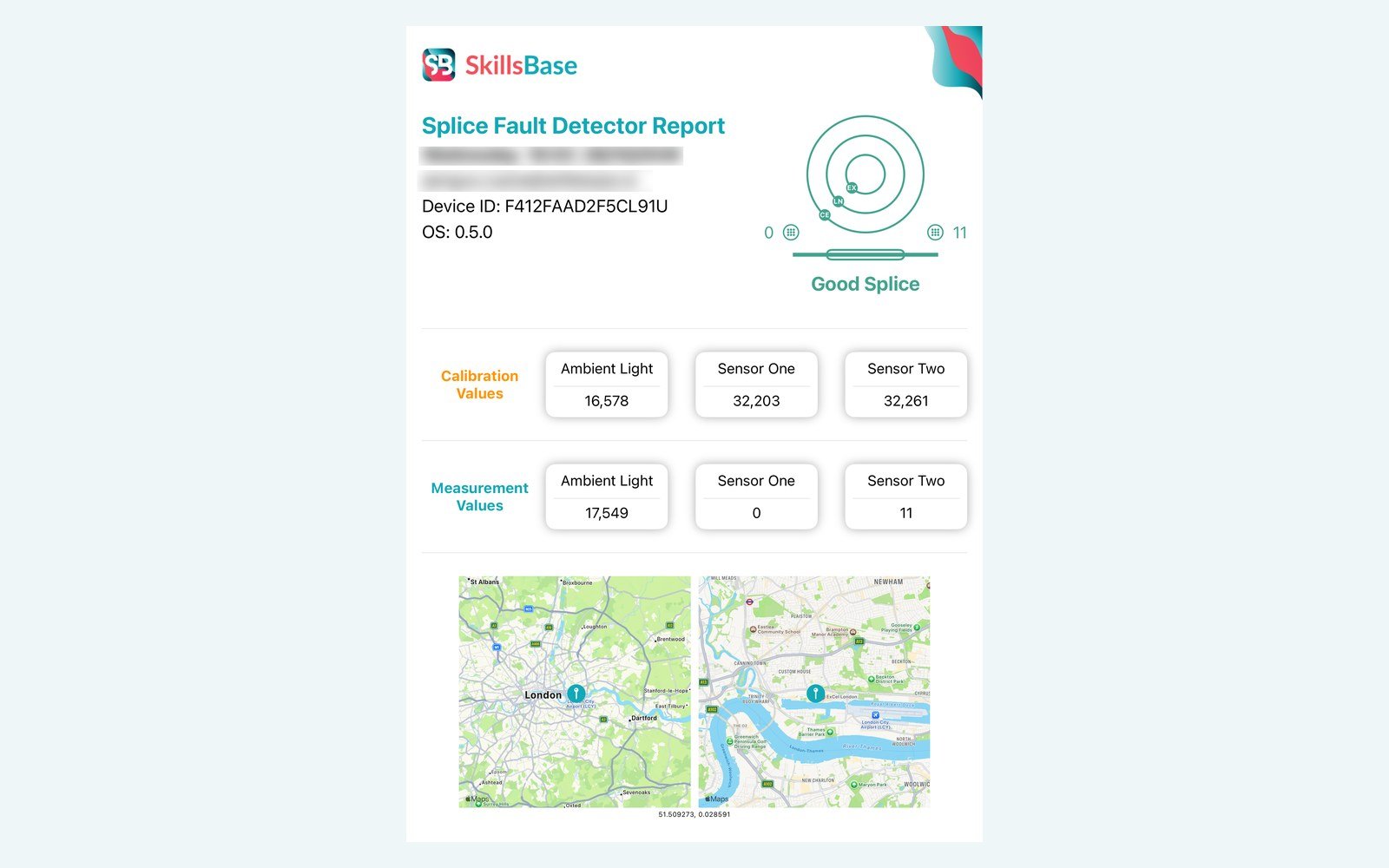
Because the result is captured by the app at the time of the test, it carries the context that makes it useful for review: when the check was carried out and what it showed. The engineer does not need to transcribe a reading or remember to add it to a report later.
Closing the gap between work and evidence
The aim is to reduce the gap between doing the work and demonstrating that it has been done. Instead of relying on a separate account of a test, the handover can include the recorded result.
For a supervisor, that evidence provides a starting point for review. For an engineer, it creates a record of the check completed before leaving the site. The benefit depends on linking the information to the right job and applying the customer’s acceptance criteria.
That last point matters. Evidence is only valuable if it is attached to the right job and assessed against the right standard. Agreeing how test records map to job references, and what counts as acceptance, is an important part of introducing digital reporting.
Fitting existing processes
Most contractors and operators already have systems for managing jobs and reporting completion. PDF reports suit teams that need a document for a job file or a client, while integration through APIs allows results to flow into an existing system without manual re-entry. Either way, the aim is to fit the evidence into the process the team already uses, rather than adding a separate one.
Getting this right can also reduce friction between the parties involved in a job. When contractor and operator are looking at the same recorded result, discussions about acceptance can focus on the evidence rather than on reconciling different accounts of what happened on site.
Judgement still matters
Digital reporting does not remove the need for judgement or appropriate audits. It makes the supporting information easier to collect and review.
Supervisors will still decide which jobs to inspect more closely, and audits will still have a role in maintaining standards. What changes is the starting point: a review that begins with recorded evidence is quicker and better informed than one that begins with a request for information.
Our goal is a clearer handover: useful evidence captured during the job, rather than reconstructed afterwards.
To explore handover reporting with Kanoptic and the Splice Fault Detector, visit kanoptic.com or contact the SkillsBase team.