
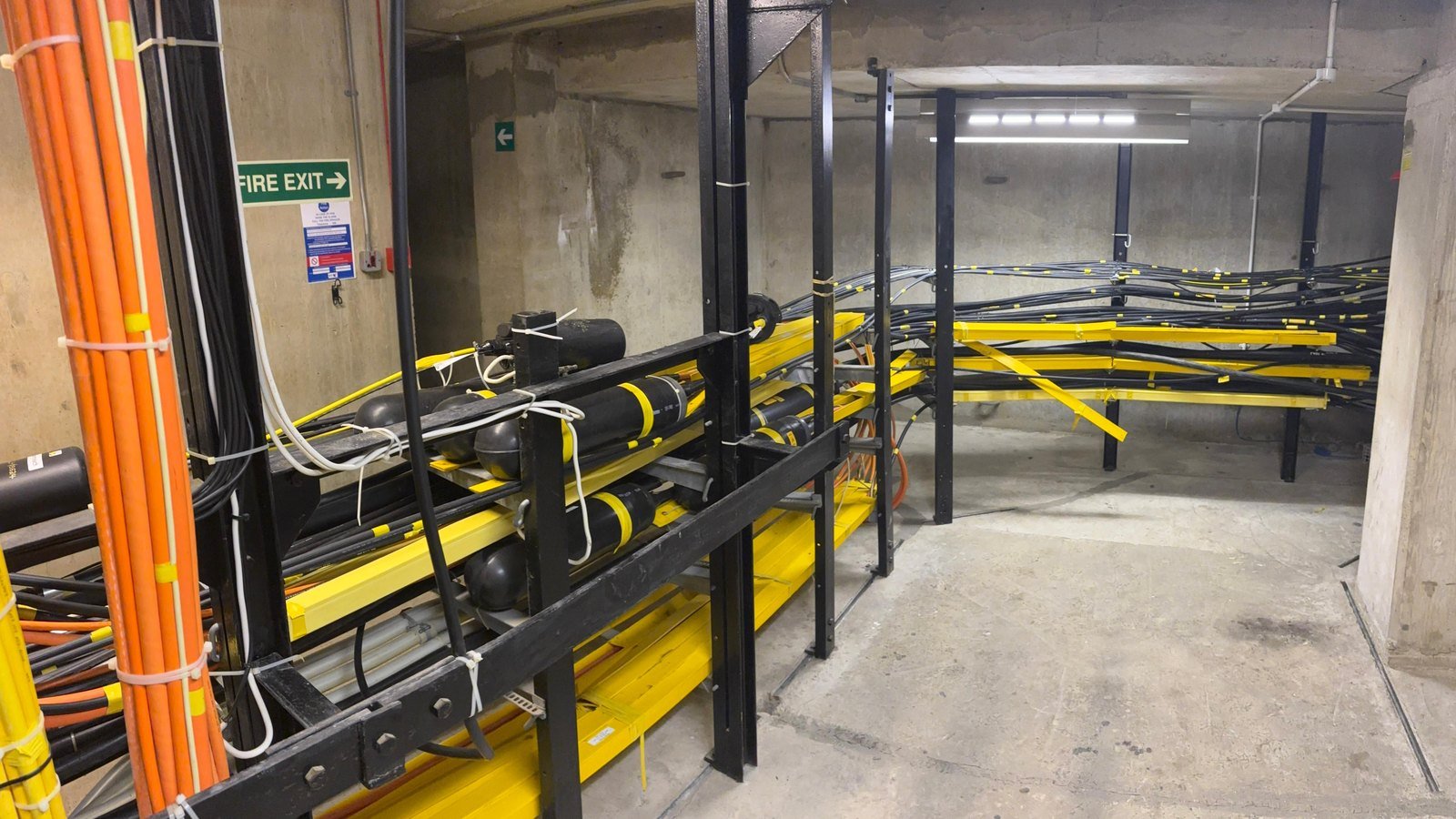
Across the world, telecoms operators are retiring the copper networks that carried telephone and broadband services for decades. As customers move to fibre, the copper left behind becomes redundant, and recovering it safely is turning into a substantial programme of work in its own right. SkillsBase is continuing to develop its Cable ID technology to support that work in the field.
A global shift away from copper
The move is happening on several continents at once, at very different scales:
- United Kingdom: BT is retiring its traditional telephone network by the end of January 2027, and Openreach has said it expects to recover up to 200,000 tonnes of copper through the 2030s as customers migrate.
- Spain: Telefónica closed its final 661 active exchanges in May 2025, completing the switch-off of a network that once had more than 8,500 copper exchanges. Closing its first 1,000 exchanges alone involved dismantling 65,000 tonnes of cable (DCD).
- Brazil: Telefónica’s Brazilian business, Vivo, estimates there are around 120,000 tonnes of copper in its legacy network, with sales expected to run until 2028 and to raise around BRL 3 billion (Bloomberg Línea).
- Canada: TELUS had removed more than 4,000 tonnes of copper by the end of 2024 as part of its move to its PureFibre network (The Logic).
- France and the Nordics: Orange plans the technical closure of its entire copper network by the end of 2030, while Telia is closing its remaining copper-based customer subscriptions in Sweden in 2026.
- Germany: Deutsche Telekom recovered 1,430 tonnes of copper in 2024 (Telekom), and the German regulator has proposed rules allowing local copper switch-off once fibre coverage reaches 80% (Telecoms.com).
- United States: AT&T recycled more than 14,000 tonnes of copper between 2021 and 2023 and has said it is scaling that work significantly.
It is not only telecoms. Rail operators such as Network Rail have also removed redundant copper cable as part of resignalling and modernisation projects, freeing up duct and trough space for new fibre and power cables.
Recovered copper has real value. BT, for example, received an upfront payment of £105m in 2024 for copper recovered from its network. But that value can only be realised if the right cable can be identified and removed without disrupting the services that remain. Where operators are extracting copper at the scale of tens or hundreds of thousands of tonnes, even a small rate of incorrect cuts would translate into a large number of affected customers.
Why identification comes first
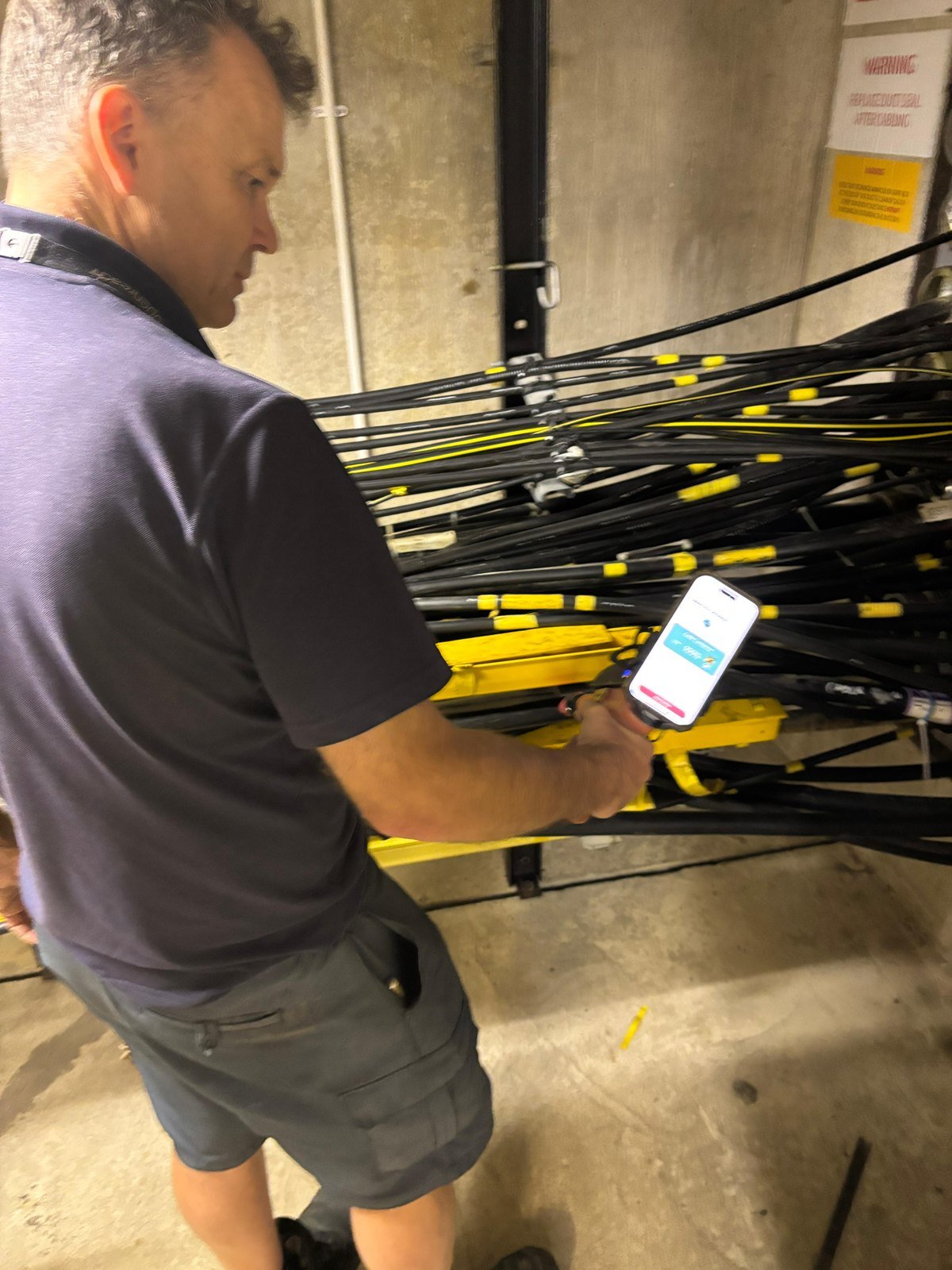
Cable identification may look like a narrow problem, but it sits at the heart of copper recovery. Every recovery job depends on the engineer being confident that the cable in front of them is the one that should be removed, and not one that is still carrying service.
Getting that decision wrong has consequences that reach well beyond the recovery job itself. Customers can lose service unexpectedly, engineers may be called out to make urgent repairs and the programme can lose time while the cause is investigated. Getting it right consistently, and quickly, is what allows recovery work to proceed at the pace that network modernisation requires.
Building on field experience
The Cable ID tool combines signal processing with magnetic-field sensing and an app-connected workflow. Its purpose is to help engineers identify a target cable with greater confidence before recovery work proceeds.
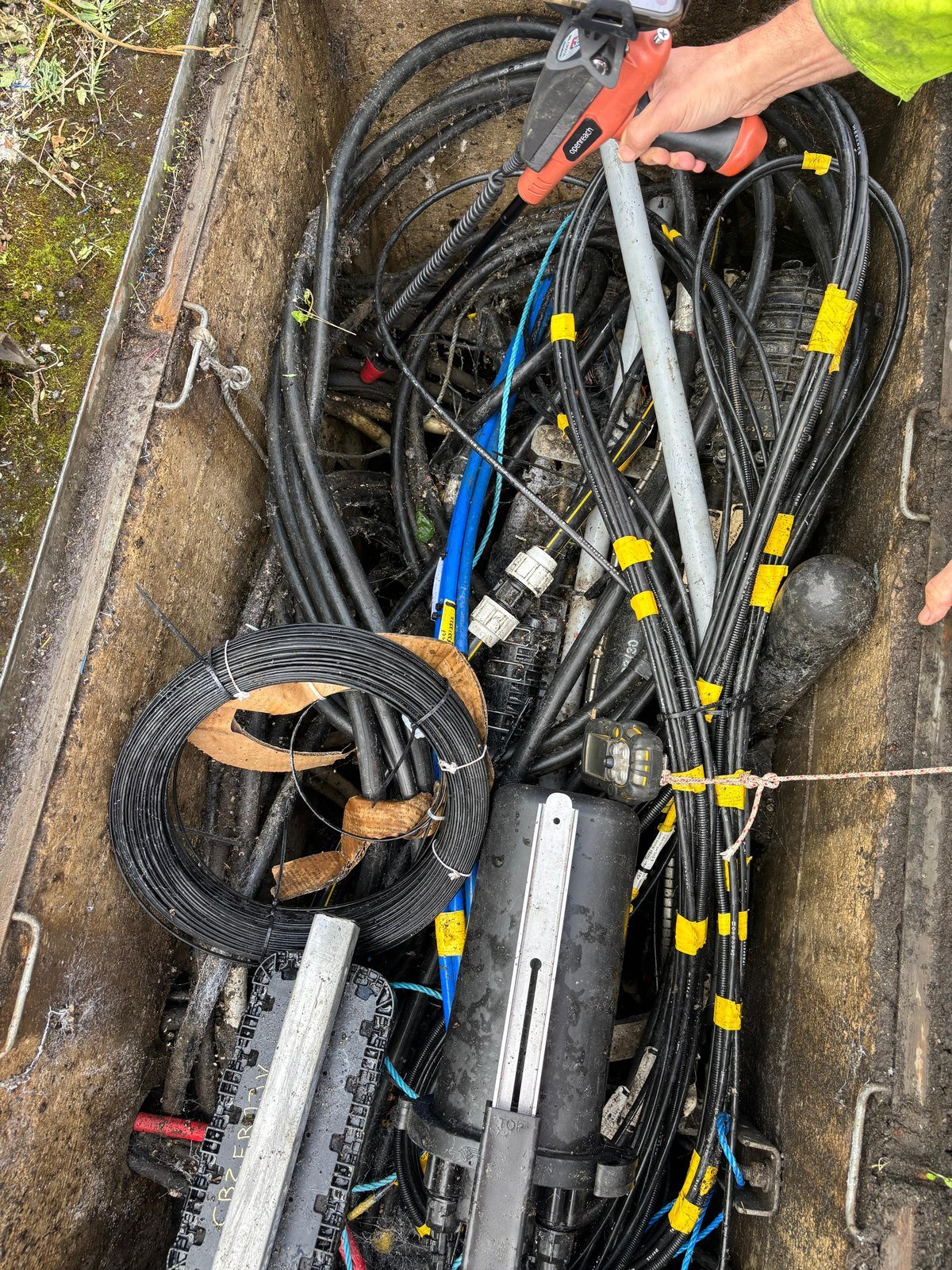
The tool has been shaped by use in operational conditions, including a field trial with Openreach reported earlier this year. Feedback from engineers has been central to understanding which parts of the process work well and where the tool can provide clearer information.
More than an electronic circuit
Developing this type of product involves more than designing an electronic circuit. The signal, receiver, software and user interface need to work together in a way that is understandable to the person holding the tool.
A strong signal is of limited use if the engineer cannot interpret it, and a clear interface is of limited use if the underlying measurement is unreliable. Progress therefore depends on developing hardware, signal processing and software together, and testing them against the conditions engineers encounter in ducts, joints and cabinets.
Our focus is on the complete process: how the equipment is connected, how a measurement is interpreted and how the result supports an engineer’s decision. Technical capability only becomes useful when it can be applied consistently in the working environment.
Ready for recovery at scale
As recovery programmes grow, the tools engineers use need to work consistently across large teams and many different sites. A simple set-up, a clear result and a straightforward way to record what was checked all matter more when recovery work is planned across a whole network rather than a single exchange area.
The objective remains practical: turn complex engineering into tools that help field teams work with clearer information and less uncertainty.
To discuss cable identification for your copper recovery programme, read more about Cable ID or contact the SkillsBase team.