
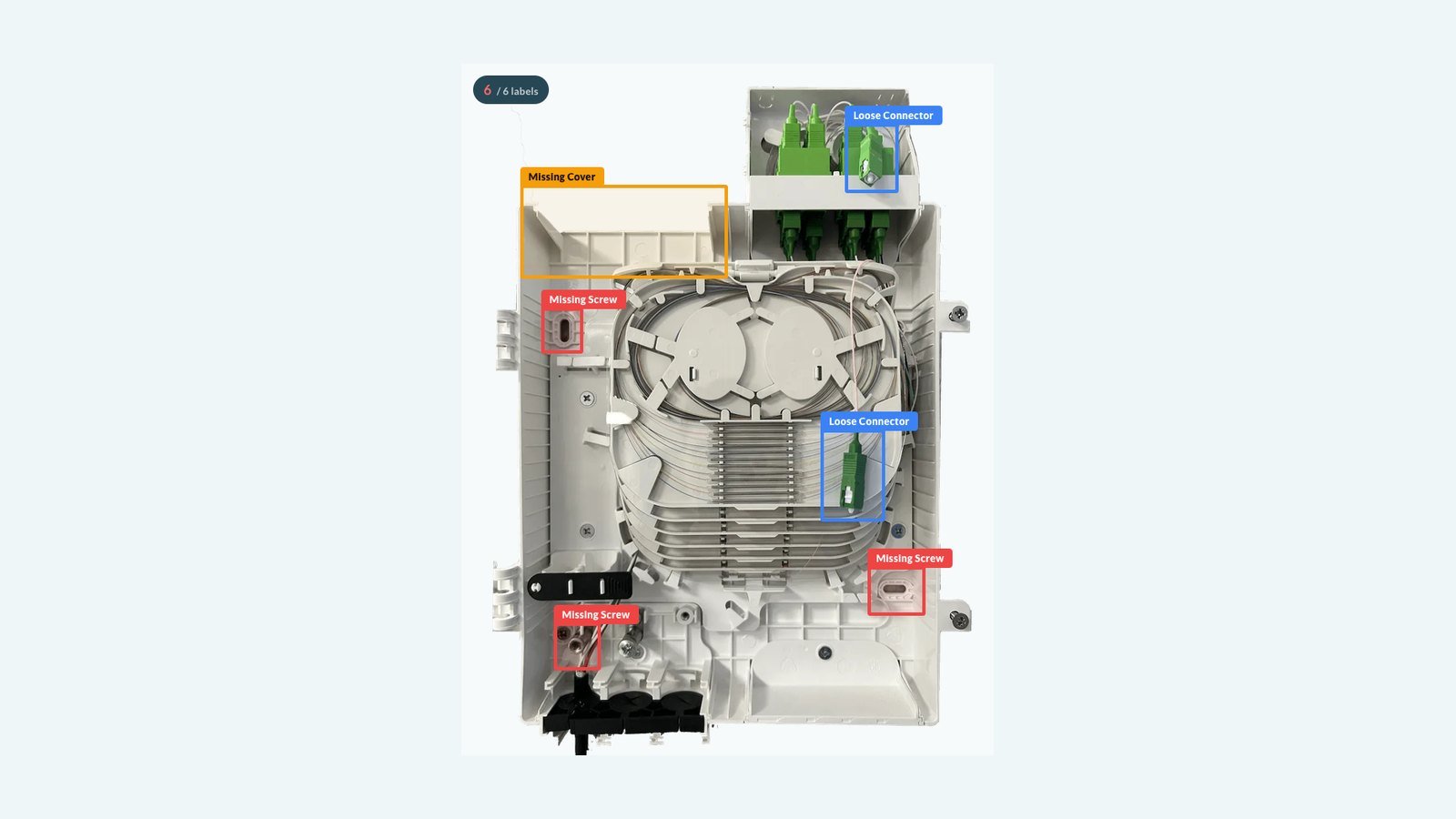
The people who inspect equipment every day often know exactly what a fault looks like. The challenge is turning that knowledge into an AI model that can help the wider team.
An experienced inspector can look at a photograph of an installation and see within moments that something is wrong: a component missing, a cable routed incorrectly, a label out of place. That judgement has usually been built over years. It is valuable, but it is difficult to share across a large and dispersed workforce, and it does not scale easily when the volume of work increases.
From expertise to examples
SkillsBase’s Self-Build AI approach allows organisations to train custom computer-vision models using examples of their own equipment and defects. Through SkillsBase Forge, users can label images, train a model and build an inspection workflow without writing code.
The key shift is who does the teaching. Rather than handing the problem to a data-science team that may not know the equipment, the people who understand the work decide what the model should look for and provide examples that show it. Their knowledge of what good and bad look like becomes the foundation of the model.
Starting with a defined task
A team might begin with a clearly defined task, such as identifying a missing component or checking a particular installation detail. Relevant examples provide the starting point for teaching the model what it should recognise.
Defining the task well is often the most important step. A clear description of the fault, agreed by the people who inspect for it, helps ensure that examples are labelled consistently. It also makes it easier to judge later whether the model is doing what the team needs.
The objective is not to create a system that understands every possible fault. It is to build a useful inspection tool around a specific operational requirement, then evaluate how reliably it performs.
How much data is enough?
Our work on training with smaller image sets shows that organisations can begin exploring this approach without first assembling an enormous image library. The amount and quality of data required still depend on the defect and the conditions in which it appears.
Starting small has practical benefits. A team can test whether a particular defect is suitable for automated checking, learn from the first results and decide where more examples are needed, before committing significant time to data collection.
The quality of examples matters as much as the number. Images should reflect the conditions in which inspections actually take place, including variations in lighting, angle and equipment. Examples of acceptable work are as important as examples of faults, because the model needs to learn the difference between them. Inspectors are well placed to judge which images are representative, which are ambiguous and which should be left out.
Experts at the centre
For SkillsBase, making AI accessible means putting domain experts at the centre of the process, not removing the need for their judgement.
A model can help apply that expertise more consistently and more widely, but the inspector’s knowledge remains what makes it useful.
To explore whether a Self-Build AI model could support your inspection process, contact the SkillsBase team.